Keeping the Texture: A Filmic Ritual
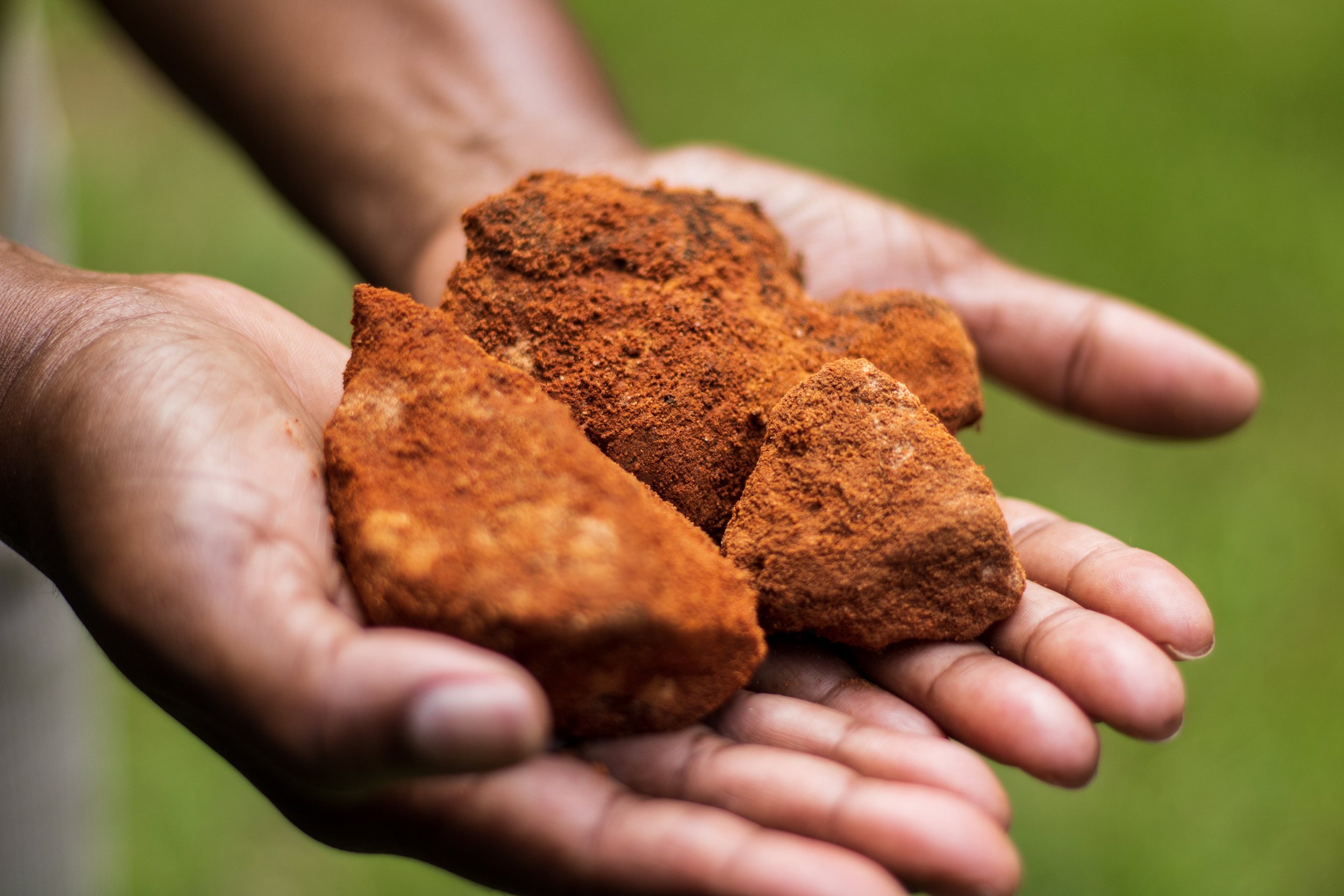
When things are in ruin, it requires you to look harder, to see differently, to usher your vision into other realms, and access the umpteenth otherworldly senses that are deeply embedded into our very being . This work is about Black folk being one with the earth and healing ourselves; specifically how my family and other Black folk in the Deep South healed and fortified themselves in relationship with the land. This is an honoring of the earth from which I came. A ritual ceremony with this soil and its medicine - this cosmically advanced ancestral technology that I manifested thru. A tribute to the dirt that kept us and a portrait of a landscape that I know intimately.
This is an ode to her, the Red Clay.
Just as this soil that we stand on is never complete, always evolving into new forms — I wanted to create a body of work that felt unfinished, imperfect, and void of obvious context. I wanted it to be raw like the people from which I came from - radical, keen, unspoken, sacred, and sometimes perplexing. A collection of images, memories, and sound, come together to create a moving archive, an exercise with heirloom — a living, breathing, altar & urn where technology, earthwork, womb, memory, and medicine is housed. This work uncovers themes of structural ruination, decay, death, and the unresolved; an attunement necessary to regenerate space for building renewed identities and reinforcing those identities that we carry in our blood.
Cited works:
Shapiro, B. (Director). (1992). Home across the water.
Robinson, G. (Director). (1974). Everything change up now: A view of the South Carolina Sea Islands.
Cohen, J. (Director). (1975). Musical Holdouts.
McCulloughs, B. (Director). (1979). Shopping Bag Spirits and Freeway Fetishes.
R Ferris, W., & Ferris, J. (Directors). (1969). Sonny Ford, Delta artist.
G. Yerman, M. Women in Art - Beverly Buchanan - An interview with Marcia G. Yerman [Video].
Delano, J. (1941, June). Eating “white dirt,” a white clay found in several parts of the county, which some people eat. Greene County, Georgia. Library of Congress.
Delano, J. (1941, June). Digging for white clay which some people eat. Near Siloam, Greene County, Georgia. Library of Congress.
Delano, J. (1941, June). The children of Mr. Frank Cunningham, FSA (Farm Security Administration) borrower, with some of the work they have done with clay they found near their home. South of Franklin, Georgia, Heard County. Library of Congress.
Delano, J. (1941, April). The children of Mr. Frank Cunningham, Negro FSA (Farm Security Administration) borrower, model figures, airplanes etc., with the clay they find near their home. Near Franklin, Heard County. Library of Congress.
Delano, J. (1941a, April). Son of Mr. Frank Cunningham, FSA (Farm Security Administration) borrower, gets some water from the spring, the only source for the family. near Franklin, Heard County, Georgia. Library of Congress.
Lange, D. (1939). A red clay Negro cemetery, Bethel Hill High School, Person County, North Carolina. Library of Congress.
Vanderbes, R. (Director). (1991). America Exposed (Eating Dirt in the South).
Beverly Buchanan installing and staining Marsh Ruins, concrete and tabby, 1981, marshes of Glynn, Brunswick, GA [original photograph in the collection of Museum of Arts and Sciences, Macon, GA; © Beverly Buchanan and MAS]
Opening / closing instrumental - “can’t do it” Owen Zahorsky 2025
Any unauthorized reproduction, redistribution, or modification of the content in this video is strictly prohibited and may result in legal action. No part of this video may be reproduced or transmitted in any form or by any means, electronic or mechanical, without the written permission of the copyright holder. For licensing, usage, or permission requests, please contact: lifeiscontinuing@gmail.com
© Quincy Howard/Quincy Quest 2025. All rights reserved.